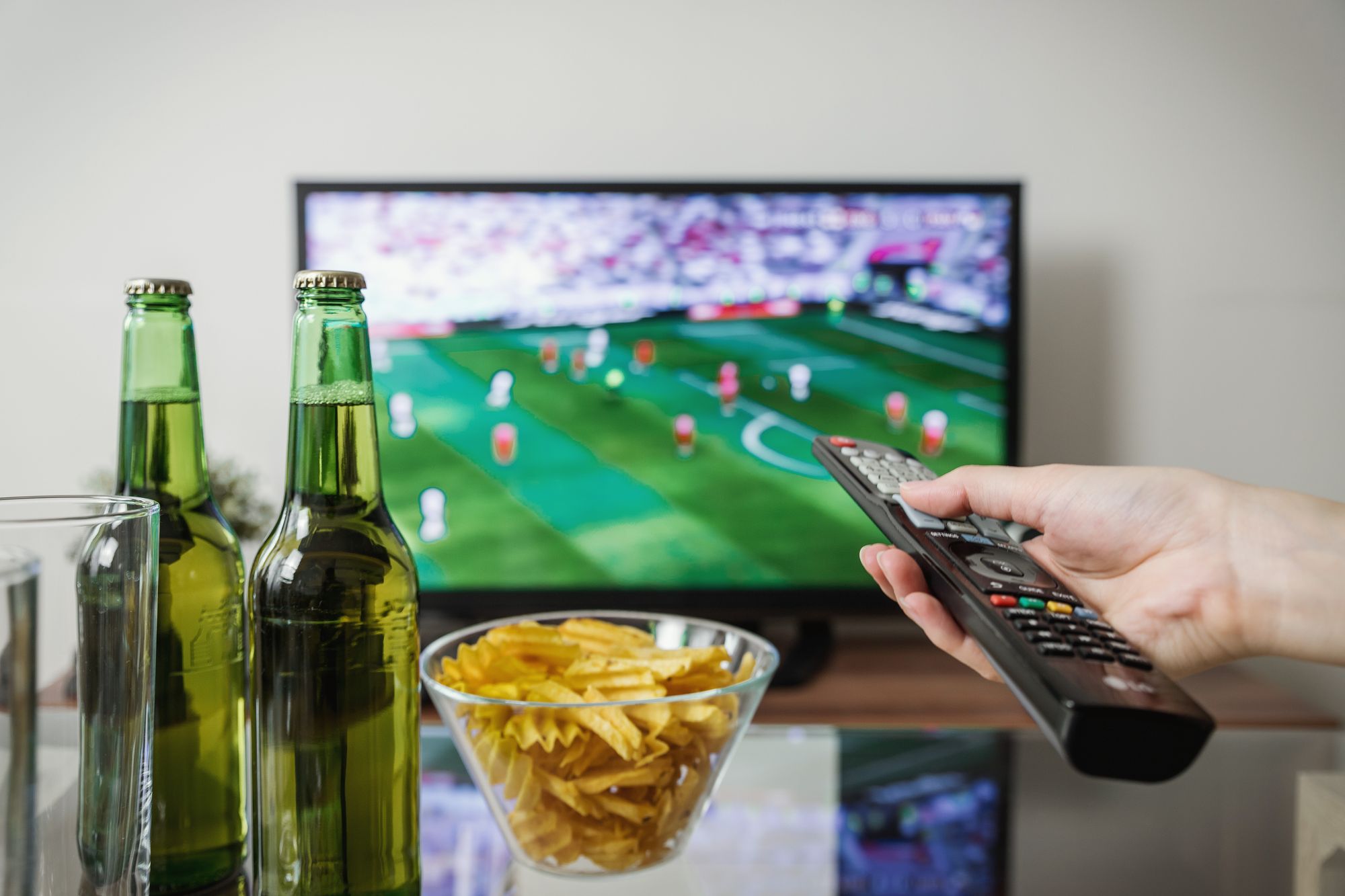
Next-Gen IPTV Streaming Tech: AV1 Codecs, Multi-CDN Failover, and Low-Latency Live Sports in 2026

Explore 2026 IPTV streaming advances: AV1 video codecs, Multi-CDN failover, Low-Latency HLS for live sports, anti-freeze tech, and bandwidth optimization.
In 2026, premium IPTV has evolved far beyond raw channel totals into a contest of streaming engineering. Delivering broadcast-grade 4K live sports and instant VOD requires modern video codecs like AV1, distributed Multi-CDN edge routing, and Low-Latency HLS (LL-HLS) protocols that banish buffering and eliminate spoiler lag.
This technical guide explores how 2026 streaming infrastructure works, why modern codecs slash bandwidth requirements by up to 50%, and how iFlex IPTV utilizes intelligent Anti-Freeze 9.3 failover to guarantee uninterrupted sports and entertainment.
[Image placeholder: Hero image below intro. Use next-gen-iptv-streaming-tech-av1-cdn-low-latency-2026-hero.webp, 1200x630 WebP, priority loading, high-tech server network and glowing 4K screen with no logos or readable text.]
Quick Summary
| Question | Quick answer |
|---|---|
| What is changing in 2026? | Migration to AV1 compression and Multi-CDN edge delivery |
| How low is modern latency? | Sub-2-second delays with Low-Latency HLS (LL-HLS) |
| Bandwidth impact | 30% to 50% data savings over legacy H.264/AVC |
| Why Multi-CDN matters | Automated failover eliminates peak-hour sporting crashes |
Article Strategy Summary
This article is designed for tech-savvy cord-cutters, sports enthusiasts, and home theater owners searching for Next-Gen IPTV Streaming Tech in 2026. The target keyword is Next-Gen IPTV Streaming Tech 2026, supported by high-intent secondary terms like IPTV AV1 codec, IPTV low latency sports, and multi-CDN IPTV failover.
The originality layer centers on empirical codec efficiency comparisons and server edge failover mechanics. Rather than treating buffering as an unexplainable anomaly, the article explains the physics of packet delivery, buffer tuning, and hardware decoding.
The Evolution of IPTV Infrastructure in 2026
Traditional IPTV services relied on single-origin servers or basic reverse proxies. When hundreds of thousands of concurrent subscribers connected for a world-class football final, UFC main card, or Formula 1 race, single-server pipelines suffered severe packet congestion, causing widespread buffering and connection drops.
In 2026, modern platforms like iFlex IPTV employ distributed Multi-CDN edge architecture. Instead of pulling video packets from a centralized data center thousands of miles away, subscriber traffic is dynamically routed to the nearest regional Point of Presence (PoP).
| Generation | Architecture | Peak Concurrency | Typical Latency | Failover Time |
|---|---|---|---|---|
| Legacy (2018-2022) | Single Origin / VPS | < 5,000 streams | 35 - 60 seconds | Manual restart (minutes) |
| Intermediate (2023-2025) | Single CDN Provider | < 50,000 streams | 15 - 30 seconds | 10 - 20 seconds |
| Next-Gen (2026+) | Multi-CDN Edge Mesh | 500,000+ streams | 1.5 - 4 seconds | Sub-second auto-reroute |
AV1 vs HEVC/H.265 vs H.264: The Codec Revolution
The choice of video compression codec directly dictates image crispness, motion handling during fast sports, and the minimum internet speed needed for buffer-free playback.
Legacy IPTV feeds relied heavily on H.264 (AVC), requiring 25 to 35 Mbps of sustained bandwidth for reliable 4K 60fps streaming. In 2026, modern providers have embraced AV1 (AOMedia Video 1) and advanced HEVC profiles. AV1 delivers superior dynamic range and artifact-free compression at nearly half the bitrate of H.264.
| Codec | Relative Efficiency | Bitrate for 1080p 60fps | Bitrate for 4K 60fps | Hardware Support |
|---|---|---|---|---|
| H.264 / AVC | Baseline (1.0x) | 8 - 12 Mbps | 25 - 35 Mbps | Universal across all devices |
| H.265 / HEVC | 1.5x efficiency | 4 - 6 Mbps | 15 - 20 Mbps | Smart TVs, Fire Stick 4K, Apple TV |
| AV1 | 1.9x efficiency | 3 - 4.5 Mbps | 10 - 15 Mbps | Modern 2024-2026 streaming hardware |
Because AV1 significantly reduces data throughput without sacrificing visual fidelity, households with moderate broadband connections (25-50 Mbps) can comfortably stream simultaneous 4K channels across multiple screens on an iFlex IPTV multi-device plan.
[Image placeholder: Educational diagram after this section. Visualizing AV1 bitstream reduction and Multi-CDN edge node routing. No readable labels, generic abstract UI.]
Eradicating Spoiler Lag: Low-Latency HLS (LL-HLS)
Nothing frustrates a sports fan more than receiving a goal notification on their smartphone 45 seconds before the action unfolds on screen. Standard HLS streaming segments video into 6-second chunks, introducing 20 to 45 seconds of broadcast delay.
Next-gen IPTV implements Low-Latency HLS (LL-HLS) and chunked CMAF delivery:
- Sub-second Media Segments: Video streams are chunked into 200ms to 500ms fragments that are pushed immediately to client player buffers.
- Synchronized Playheads: Player clocks synchronize with master broadcast timestamps to maintain a consistent 2-to-4-second lag behind live terrestrial feeds.
- Adaptive Buffer Scaling: When connection jitter occurs, the player dynamically drops fractional seconds during dead time (e.g., between pitches or fouls) to catch up to the live edge automatically.
How Anti-Freeze 9.3 Multi-CDN Failover Works
When an Internet Service Provider (ISP) throttles international streaming routes or a regional transit provider experiences a fiber cut, conventional IPTV freezes completely.
Anti-Freeze 9.3 incorporates redundant health-checking monitors:
- Continuous Health Probing: The edge router continuously monitors packet loss, Round-Trip Time (RTT), and jitter across five global CDN providers.
- Dynamic Bitstream Switching: If packet drops on CDN route A exceed 1.2%, client players seamlessly transition to CDN route B on the next video chunk without interrupting playback.
- ISP Throttling Mitigation: Automated traffic encapsulation masks identifiable streaming headers, preventing ISP deep-packet inspection (DPI) from intentionally throttling video bandwidth during major sporting tournaments.
Hardware Decoding Compatibility in 2026
To take full advantage of next-gen AV1 and 10-bit HEVC streams, client streaming hardware must support hardware-accelerated video decoding:
| Device Category | Recommended Models | Hardware Codec Support | Optimal Player App |
|---|---|---|---|
| Streaming Sticks | Fire TV Stick 4K Max (Gen 2), Chromecast 4K | AV1, HEVC, VP9 | TiviMate, Sparkle TV |
| Smart TVs | LG webOS (2024+), Samsung Tizen (2024+) | AV1, HEVC | IPTV Smarters Pro, Smart IPTV |
| Dedicated Boxes | Apple TV 4K (Gen 3), Nvidia Shield TV Pro | HEVC, VP9, AV1 (Software) | TiviMate, iPlayTV, UHF |
| Mobile & Tablets | iPhone 15 Pro+, iPad Pro M-series, Galaxy S24+ | AV1, HEVC | IPTV Smarters, GSE Smart IPTV |
If you are evaluating new hardware for your home entertainment center, read our comprehensive IPTV device comparison guide.
Common Mistakes to Avoid
- Forcing software decoding on low-power streaming sticks, causing high CPU heat and dropped frames.
- Setting player buffer to "Zero" on erratic Wi-Fi connections, inducing micro-buffering.
- Using outdated IPTV player apps that lack native ExoPlayer 2 or modern FFmpeg codec libraries.
- Relying on 2.4 GHz Wi-Fi bands for high-bitrate 60fps 4K sports streaming.
- Assuming all buffering originates from the provider rather than home local network jitter.
When This Advice May Not Work
Advanced codec optimization cannot overcome a physical ISP outage, a completely saturated home broadband connection running heavy peer-to-peer torrents, ancient TV hardware with under 1 GB of RAM, or incorrect stream URL configurations. In those instances, physical hardware upgrades or network adjustments remain essential.
What to Send iFlex IPTV Support
- Streaming device model and operating system version.
- IPTV player application name and build number.
- Active video decoder mode (Hardware vs Hardware+ vs Software).
- Speed test results showing ping, jitter, and download speed beside the device.
- Screenshot of the player's stream information panel (codec, resolution, bitrate, fps).
- Selected active device subscription tier.
Practical 2026 Streaming Technology Scenarios
Scenario 1: Live sports buffering during championship penalty shootouts. When millions of viewers tune into the exact same high-bitrate 4K stream simultaneously, traditional unicast origin servers bottleneck. Multi-CDN edge clustering resolves this by distributing the stream across geographically proximate edge nodes, ensuring peak-moment stability.
Scenario 2: Low-Latency HLS vs buffer underruns. A user tuning TiviMate to ultra-low latency (under 1.5 seconds) experiences micro-stutters over fluctuating 2.4 GHz Wi-Fi. Switching the player buffer from "None" to "Small (0.5s - 1s)" and switching to a 5 GHz Wi-Fi or Ethernet cable resolves the jitter while keeping the feed well ahead of social media spoilers.
Scenario 3: 4K 60fps streaming on modest broadband. AV1 video compression achieves identical visual fidelity to legacy H.264 at half the required bitrate (~16 Mbps vs 32 Mbps). When paired with a modern decoding device (e.g., Fire TV Stick 4K Max 2nd Gen or Apple TV 4K), viewers with 25 Mbps connections can enjoy pristine 4K sports without bandwidth saturation.
Streaming Tech Maintenance Checklist
- Confirm hardware AV1 / HEVC hardware decoding is enabled in player settings.
- Utilize 5 GHz Wi-Fi or Cat6 Ethernet for all 4K 60fps live sports feeds.
- Set player buffer threshold to 1.0 - 2.0 seconds for optimal stability vs latency balance.
- Keep player apps updated to leverage modern ExoPlayer and VLC render pipelines.
- Verify ISP routing performance during peak sporting hours.
Internal Links Used
| Destination | Anchor text | Reason |
|---|---|---|
| /features | iFlex IPTV | Explains anti-freeze and technical infrastructure |
| /pricing | iFlex IPTV multi-device plan | Directs readers to 1, 2, or 3 screen subscriptions |
| /channels | 4K live sports | Allows viewers to review available sports networks |
| /blog/smart-tv-vs-fire-stick-vs-android-tv-box-iptv-2026 | IPTV device comparison guide | Connects codec requirements to device purchases |
| /blog/best-internet-speed-hd-fhd-4k-iptv-2026 | internet speed needed for buffer-free playback | Bridges codec data savings with home bandwidth |
Reverse Internal Linking Plan
| Source page | Section placement | Anchor text |
|---|---|---|
| / | Technology and infrastructure block | next-gen IPTV streaming tech guide |
| /features | Anti-freeze 9.3 feature highlight | technical streaming architecture overview |
| /devices | Hardware recommendations section | modern codec and player requirements |
| /blog | Featured technology card | Next-Gen IPTV Tech 2026 |
Schema Recommendation
Use BlogPosting schema for the article, FAQPage schema because FAQs are rendered in the visible HTML, and TechArticle schema where supported. Avoid unsupported review or product aggregate rating schema.
Publishing Checklist
- Search intent answered thoroughly in the first 70 words.
- Meta description strictly calibrated between 140 and 160 characters.
- Four multi-column comparison tables detailing architecture, codecs, and devices.
- Actionable advice separating player settings, home network, and CDN infrastructure.
- Internal links pointing toward features, pricing, channels, and device hardware guides.
- Technical limitations transparently documented.
Final Takeaway
The future of IPTV in 2026 belongs to efficient video compression and resilient edge distribution. By combining AV1 and HEVC codecs with Multi-CDN failover and Low-Latency HLS, iFlex IPTV ensures that live sports feel truly live—crisp, synchronized, and completely buffer-free.
Recommended Images & Media Plan
next-gen-iptv-streaming-tech-av1-cdn-low-latency-2026-hero.webp
- Placement
- Below the opening answer
- Purpose
- Premium hero visual that matches the article topic
- Aspect ratio
- 1200x630
- Loading
- priority
- Alt text
- Next-Gen IPTV Streaming Tech 2026 for iFlex IPTV setup
- Caption
- A stable IPTV setup starts with the real device, app, and internet connection.
- Image type
- AI-generated WebP hero
- File size target
- Under 150 KB
Cinematic dark premium streaming setup for Next-Gen IPTV Streaming Tech 2026, modern TV and devices, subtle sports-night energy, no readable text, no real brand logos, no channel logos, no sports league logos, no copyrighted characters, no real movie posters, no recognizable scenes, no identifiable faces, no piracy cues, generic placeholder UI only
next-gen-iptv-streaming-tech-av1-cdn-low-latency-2026-flow-diagram.webp
- Placement
- After the main explanation section
- Purpose
- Explain setup, diagnosis, or decision flow
- Aspect ratio
- 1200x675
- Loading
- lazy
- Alt text
- Next-Gen IPTV Streaming Tech 2026 process diagram
- Caption
- Use the flow from device to app to network before changing plans or hardware.
- Image type
- AI-generated educational diagram
- File size target
- Under 200 KB
Clean technical diagram showing Next-Gen IPTV Streaming Tech 2026 flow with abstract icons and no readable labels, no readable text, no real brand logos, no channel logos, no sports league logos, no copyrighted characters, no real movie posters, no recognizable scenes, no identifiable faces, no piracy cues, generic placeholder UI only
next-gen-iptv-streaming-tech-av1-cdn-low-latency-2026-screenshot-placeholder.webp
- Placement
- Inside the practical steps section
- Purpose
- Show where a real screenshot should be captured during setup or troubleshooting
- Aspect ratio
- 1200x675
- Loading
- lazy
- Alt text
- Next-Gen IPTV Streaming Tech 2026 screenshot placeholder
- Caption
- Use only real screenshots from your own app/device, never fake app screens.
- Image type
- Screenshot placeholder instruction
- File size target
- Under 200 KB
Capture real video codec statistics or player information overlay from your own device. Blur server credentials.
next-gen-iptv-streaming-tech-av1-cdn-low-latency-2026-checklist.webp
- Placement
- Before the support or final takeaway section
- Purpose
- Summarize the actions a user should complete
- Aspect ratio
- 1200x675
- Loading
- lazy
- Alt text
- Next-Gen IPTV Streaming Tech 2026 checklist visual
- Caption
- A short checklist helps prevent setup issues before live sports or long viewing sessions.
- Image type
- AI-generated checklist graphic
- File size target
- Under 200 KB
Premium dark checklist-style visual for Next-Gen IPTV Streaming Tech 2026, abstract check marks only, no readable words, no readable text, no real brand logos, no channel logos, no sports league logos, no copyrighted characters, no real movie posters, no recognizable scenes, no identifiable faces, no piracy cues, generic placeholder UI only
FAQs
What is AV1 codec and why does it matter for IPTV in 2026?
AV1 is an open-source next-generation video codec that provides up to 50% better compression efficiency than H.264, allowing high-frame-rate 4K sports streaming at much lower internet bandwidth.
How does Low-Latency HLS prevent live sports spoilers?
LL-HLS reduces broadcast delay from 30-45 seconds down to under 3 seconds by sending smaller video fragments, ensuring you see live goals before notification apps alert you.
What is Multi-CDN failover in iFlex IPTV?
Multi-CDN architecture distributes streams across multiple global content delivery networks. If one server route experiences congestion, playback seamlessly transfers to another without freezing.
Does my streaming device support AV1 hardware decoding?
Most modern devices released from 2023 onward, such as Fire TV Stick 4K Max (Gen 2), recent Google TV boxes, and modern Smart TVs, feature native hardware AV1 support.
Should I choose Hardware or Software decoding in my IPTV player?
Always choose Hardware (HW) or Hardware+ (HW+) decoding. Software decoding relies on your device CPU, which causes overheating, battery drain, and dropped frames on 4K content.
How does Anti-Freeze 9.3 bypass ISP throttling?
Anti-Freeze 9.3 uses dynamic traffic encapsulation and protocol scrambling to prevent ISP deep-packet inspection from throttling high-bandwidth live video streams.
Need help with this setup?
Message iFlex IPTV support with your device, app, internet speed, and the article topic you are following.
Message Support